Component inspection and purchasing risk controls.
From supplier and label review to independent laboratory inspection and shipment release. We check original identity, unused condition and conformity to your order as separate requirements.
Discuss your inspection requirements
The specification is the starting point.
We supply only original, unused components meeting the agreed condition. Counterfeit, refurbished, remarked and mixed genuine-and-counterfeit material are outside our supply policy.
Before ordering, agree the complete ordering code, date-code and lot restrictions, packaging, source documents and application-specific acceptance requirements. Original identity alone does not establish unused condition or suitability for your board.
Our experienced supplier review and examination of the actual lot work together. If testing identifies non-original material, we stop cooperation with that supplier. A suspicious label prompts investigation; it is not automatically a confirmed counterfeit finding.
Check the lot. Not just the label.
These details establish what is being offered and what needs to be verified.
- IdentityFull MPN, manufacturer, package and marking consistency.
- Lot detailsQuantity, date codes, batch identifiers, mixed-lot status and the scope of available traceability.
- ConditionPackaging, original-seal status, visible condition, available storage records and applicable ESD or moisture-sensitive handling requirements.
- DocumentationSource records and country-of-origin evidence available for the proposed lot, with their scope and limitations made clear. Shipping location alone does not establish origin.
From the shipment record to the inspection plan.
Our ICM-42688-P shipment material includes moisture-barrier packaging and laboratory-intake labels. Review the label, seal and handling requirements alongside the inspection record.
A label records a handling step. The applicable laboratory report records the performed methods, sample quantities and findings.
See the shipment photographsFrom incoming review to laboratory release.
Every shipment lot undergoes independent inspection. This does not mean every unit receives every test.
- ICstoq review: confirm the complete requirement and compare device, tray or reel, bag and carton identification with the available source records.
- Preliminary inspection: our regular inspection partners, normally ICLab, examine appearance, package condition and dimensions, with further screening where applicable and agreed.
- Additional approved testing: White Horse Laboratories, GETS or another customer-approved laboratory confirms exact-device support, fixtures, methods, samples, conditions, fees and timing before work begins.
- Release decision: review the report and exceptions against the order. Hold unresolved concerns; do not send a failed lot onward as if the preliminary review had passed.
Advanced electrical, application-board, temperature or destructive work needs a specific agreement, including its effect on usable quantity. Laboratory equipment and credentials belong to the laboratory.
AMD/Xilinx identity and grade reviewChoose the checks your order needs.
Share your incoming inspection requirements. We coordinate the laboratory, sampling and test plan before the order is released.

Start with the part and the question your quality team needs answered. Different methods provide different evidence.
White Horse laboratory capabilitiesDocumentation & packaging
Review labels, carrier, moisture protection and available lot documents.
The supplied reports include packaging checks; AD5535BKBCZ shows a moisture barrier bag, humidity indicator and desiccant.
External visual inspection
Examine markings, package condition, terminals, dimensions and signs of prior use.
Both report examples include visual inspection. Their sample counts and overall outcomes differ.
Marking & resurfacing checks
Check for surface alteration using an agreed method and sample plan.
The AD5535BKBCZ example records chemical and mechanical checks on one sample.
X-ray inspection
Review internal construction and connections where suitable for the device.
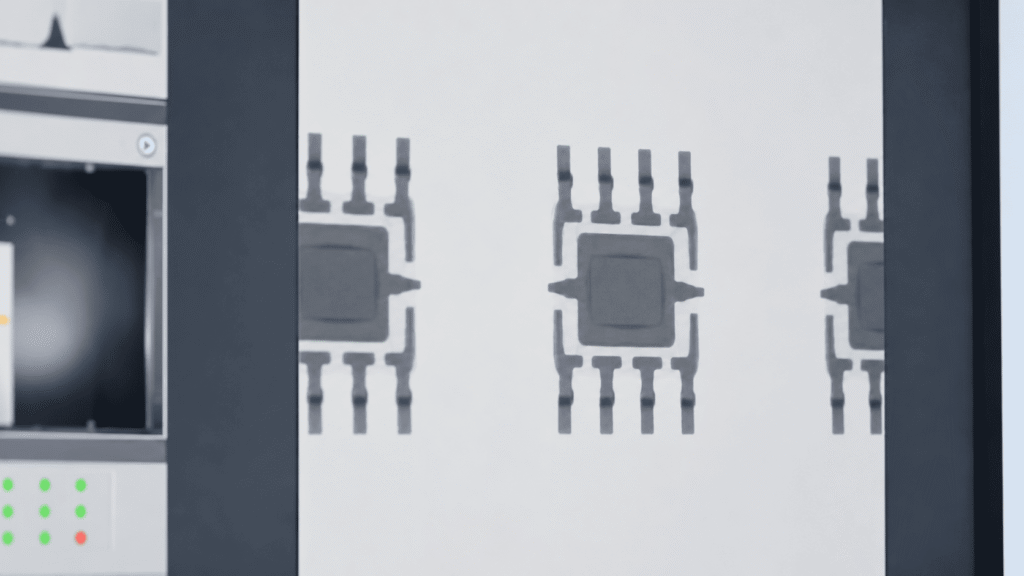
Available subject to the laboratory’s assessment; not performed in these two report examples.
XRF material analysis
Assess elemental composition for the agreed material question.
A separate test option; not performed in these two report examples.
Decapsulation & die analysis
Inspect die features after opening the package; agree destructive samples first.
A separate test option; not performed in these two report examples.
Electrical & functional testing
Define the required pin, curve-trace, functional, DC, AC or temperature checks.
Coverage depends on the device, fixtures and test program. Neither example establishes electrical performance.
Additional investigation
Discuss reliability or failure-analysis needs with the laboratory.
Confirm feasibility, sample quantity, destructive work, cost and acceptance criteria before testing.
Look inside the inspection record.
Packaging, physical checks and recorded observations help your quality team understand a report before accepting material.
Protective packaging
AD5535BKBCZ · packaging, humidity indicator and desiccant · report page 6.
Report example · Acceptable overall
Terminals and coplanarity
AD5535BKBCZ · solder balls and coplanarity · report page 9.
Report example · Acceptable overall
Findings that need a disposition
AD9689BBPZ-2600 · contamination and adhesive observations · report page 9. Overall conclusion: Not Acceptable.
Report example · Not Acceptable overall
These excerpts show how inspection findings are documented. Your order’s report follows the agreed part, lot, sample plan and test scope.
Read the findings before releasing a shipment.
An inspection report brings together the tested samples, methods, photographs and acceptance conclusion. Our report guide compares two actual White Horse examples, including a report that identifies an unacceptable package-body condition.
Compare the report examplesChoose the laboratory and the scope together.
Our normal first stage is ICLab; further White Horse Laboratories, GETS or other approved testing follows the scope agreed with you.
These external laboratory references help you explore services. They do not imply that ICstoq owns the facilities, holds their accreditation or has an exclusive partnership.
Tell us your preferred laboratory or receiving inspection centre, including a nominated site in Hong Kong or Malaysia if relevant. We confirm capability, location, applicable accreditation scope, availability and reporting requirements for the chosen test plan.
A finding needs a decision.
If inspection raises a question, the next step is review against the order’s acceptance criteria.
We retain the laboratory’s conclusion and its observations together. An acceptable result does not automatically authorize shipment: source records, packaging, quantity and the agreed order conditions still need to match. Where release conditions are not met, shipment stays on hold while we discuss the finding and next steps. Replacement lots, further testing, fees and refunds follow the terms agreed before the order.
Review order and exception terms
Does inspection mean every piece is tested?
No. Inspection is arranged for each lot, with method-specific sampling and scope agreed for the order. Some methods may be destructive.
Can I request additional or customer-specified tests?
Yes. Include the requested method, laboratory, sampling and acceptance criteria in your enquiry. Capability, cost and timing need to be confirmed before commitment.
Is a sample report evidence for the part I am buying?
No. The public excerpt explains how reports are read. Your order needs evidence tied to its own part, lot and inspection plan. Read the received quantity and method-specific sample counts, test conditions, observations, omissions and limitations together.
Build an evidence review for the offered lot.
Tell us what your supplier-approval and incoming-quality teams require. We review what is available, identify gaps and agree any additional work before commitment.
- Source and identity
- Review the source category, complete device identity and available label or origin records. Record missing links in the chain; do not treat a distributor document as manufacturer traceability.
- Condition and inspection
- Tie photographs and reports to the actual offered lot. Identify methods, sample quantities, test conditions, observations and limitations, including checks that were not performed.
- Exceptions and decision
- Keep the laboratory conclusion with its findings. Name the customer reviewer, the acceptance criteria and the disposition of any unresolved issue before release.
- Receiving handoff
- Confirm the accepted quantity, carrier, moisture-sensitive packing and lot identification to accompany the shipment. Agree how tested, programmed or destructive samples affect usable quantity.
The public report examples explain our review process. They are not the evidence package for your order, and document availability must be confirmed for its source and lot.
When the right decision is not to ship.
A historical FPGA inspection case shows how we act when original identity and new, unused condition cannot be resolved together.
Four suppliers reviewed
ICstoq incurred preliminary inspection costs while reviewing four supplier offers. The project was stopped and no material was delivered because conformity with the customer’s new and unused requirement could not be established with sufficient confidence.
What the records show
One retained visual-inspection summary records 33 samples and a failed result for substrate scratches. A separate retained summary records 33 visual samples and a failed result for apparent lid/substrate offset. One dimensional sample in each summary was within the referenced limits.
These records do not establish a distinct-device total across the photo groups. Clear markings, satisfactory solder-ball observations and a single dimensional result did not override a recorded appearance failure.
Recorded inspection views


Observation, suspicion and decision
The offset note raised possible lid replacement as a suspicion, without a measured offset or conclusive cause. The findings do not prove a specific counterfeit, repair or reballing process. The unresolved condition concern was sufficient to stop release.
Inspection observations are drawn from the retained records. Supplier count, inspection costs and the decision to end the project are ICstoq’s account. Device and customer identities are withheld.
Make your quality requirements part of the RFQ.
Start with the part number and quantity. Add your mandatory date-code, packaging, traceability and inspection requirements if they are already defined. Detailed order evidence can be reviewed as the proposed lot is established. A complete quality questionnaire is not needed for a first enquiry; if a required test or document cannot be provided, we tell you before commitment.
Send a requirement