Microchip PolarFire
Start with the released PolarFire target. Separate an MPF FPGA requirement from an MPFS SoC, then keep the device option, speed, package, grade and programming state in the quotation.
FPGA and SoC buying decisions.
- First decision
- MPF or MPFS
- Acceptance
- Logic or full boot path
Ordering and acceptance reference · supply confirmed by quotation
Start with the requirement you already have.
The comparison helps restore the fields a family search leaves out. Follow an exact-device page where available, or send the complete code through the enquiry form.
| Order / record | What it means | Before you accept |
|---|---|---|
| MPF050TL-FCSG325E | TL target; no -1 field in this code. | Preserve the released project target and review any changed option. |
| MPF050TS-1FCSG325I | TS, explicit -1 speed and industrial I. | Review speed, device features and temperature independently. |
| MPF200TS-FCS325M | FCS325M package/temperature offering. | State material, trace and additional screening requirements separately. |
| MPFS250T-FCVG784T2 | SoC with the listed T2 offering. | Agree processor boot, memory and FPGA-fabric acceptance. |
Bring the design constraint into the buying decision.
Select a purchasing issue to see what needs agreement before a lot is accepted.
Recover the complete project target.
A series name leaves the FPGA/SoC choice, device option, speed, package and grade unresolved. Ask the design owner for the exact released target or an earlier approved purchase record.
Full code, project target and approved alternatives.
List every field that changed.
A package change, a speed change and a temperature change need different reviews. Compare the proposed code field by field and keep a written approval rather than treating a shared family name as interchangeability.
Changed fields and the engineering approval.
Include the processor platform.
Agree fabric programming and processor boot as separate acceptance items. Name the boot software, memory setup and interfaces that the product depends on so the sample plan covers the actual board.
Fabric image, boot baseline and acceptance owner.
Keep the build requirement intact through delivery.
An OEM or EMS may need only the missing FPGA line to complete a larger board build. Confirm the minimum useful batch and the receiving documents without reopening the approved design by accident.
Confirm the useful first quantity, lot separation and receiving conditions with your assembly or service team.
Plan the shortage purchaseRead the fields. Keep the device context.
Explore this supplied USB5744 distributor label. It belongs to a different device; use the offered lot’s own label to establish identity and handling requirements.
For Microchip PolarFirePolarFire labels must be checked against their own device and package references. The USB5744 distributor-label example below shows field distinctions only; its quantity, moisture class and seal date do not describe an MPF or MPFS lot.
Distributor packaging label
Microchip
USB5744BT-I/2GX01
Select a marker on the image or a number below. Each field answers a different purchasing question.
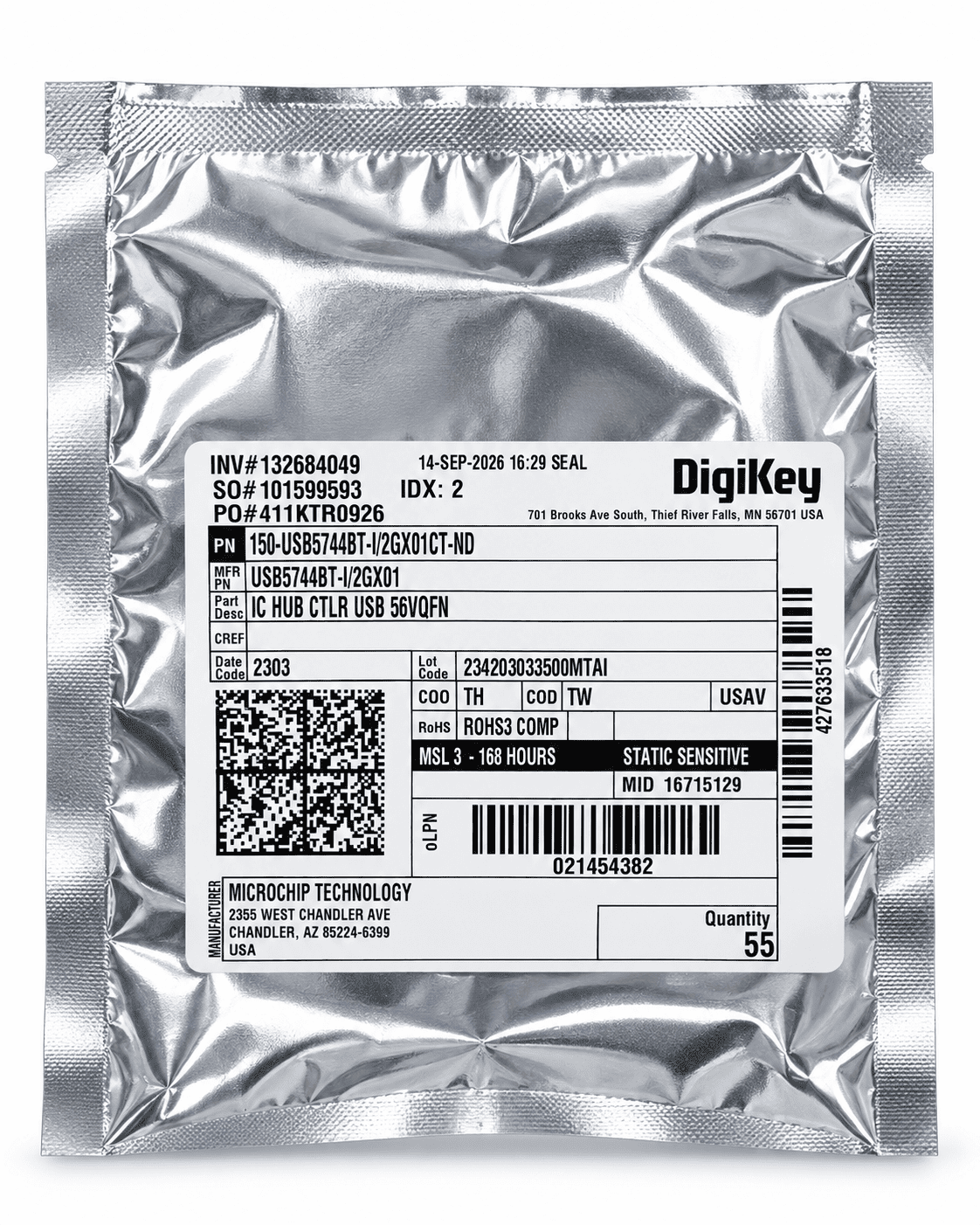
Manufacturer versus distributor code
MFR PN is the Microchip identifier. The longer PN above is a distributor catalogue code and includes its own fulfilment suffix.
Lot and date
The date and lot occupy separate fields. Keep both when asking for one-lot material or checking whether a split shipment meets your receiving rules.
Seal timestamp
This is the distributor’s seal record. It does not establish the silicon manufacturing date or the entire storage history.
Moisture handling
This USB5744 pack states MSL 3 and 168 hours. Use the requested device’s own package classification and applicable handling conditions; these values do not transfer to another device.
Pack quantity
The illustrated distributor pack carries its own quantity. A distributor cut-tape count is not the manufacturer’s standard full-reel quantity.
For this USB hub, retain /2GX01 and confirm the accepted carrier, lot and moisture-handling record.
Discuss this requirement ↗Agree the acceptance brief before testing.
Identity, unused condition and the complete order code are essential. Your device’s programming, assembly and operating requirements still need their own checks.
Identity and handling
Keep device option, speed, package and grade together with the lot and moisture-handling record. Distinguish a label photograph from evidence of programming state.
Configuration approval
Name the target, tool and image version. State which programming or security operations are allowed and what condition the samples must be returned in.
Acceptance route
For FPGA-only devices, define the required logic/interfaces. For SoCs, add boot and memory checks. Special screening or certificates must be individually agreed.
Agree the lot, sample count, method, fixture, limits, report and sample disposition. Electrical or specialised analysis depends on laboratory feasibility; it is not implied by an external visual inspection.
Send the requirement your board needs.
ICstoq reviews our inventory and established China supply relationships against the complete order code, quantity, required arrival date and destination. The quotation confirms the offered lot, inspection scope and delivery terms.
Send your enquiryInclude these details
- Complete MPF or MPFS order code and approved alternatives
- Released project, programming state and allowed operations
- For MPFS: boot software and memory setup; any required screening/documents
Identify fixed requirements and any alternatives already approved by your engineering team. We agree feasible inspection work and sample acceptance before proceeding.