MPFS250T-FCVG784T2
MPFS250T-FCVG784T2 is a PolarFire SoC requirement. Keep the T2 offering and FCVG784 package together, then agree processor boot, memory and FPGA-fabric acceptance with the people who own the design.
Approve the SoC boot path.
- Platform
- MPFS SoC
- Order option
- FCVG784T2
Ordering and acceptance reference · supply confirmed by quotation
Keep every ordering field in the comparison.
Select a code segment, then compare the offered identity with the released BOM. The source references below establish ordering context, not live availability.
| Order / record | What it means | Before you accept |
|---|---|---|
| MPFS versus MPF | The SoC acceptance discussion includes the processor platform. | Name the boot chain and memory setup as well as the FPGA image. |
| T2 offering | The exact code appears in the manufacturer’s T2 device table. | Do not shorten it to T or accept a generic family qualification claim. |
| Production software | Fabric configuration and processor boot are separate checks. | Agree versions and owners for both before sample approval. |
Resolve the decision behind the shortage.
Choose the situation that applies to your order. Each one changes what purchasing, engineering and the test owner need to agree.
Keep the complete platform baseline.
Send the released FPGA target, boot-software revision and external-memory configuration. That gives the supply and test teams a defined device requirement without changing your existing EMS arrangement.
Board, fabric image, boot chain and memory setup.
Keep two acceptance paths visible.
Programming the fabric does not prove processor boot, memory initialization or the interfaces used by the product. Define what starts, what is logged and which failures require engineering review.
Expected boot evidence and memory/interface tests.
Treat the changed offering as an alternative.
Keep T2 on the purchase requirement unless engineering explicitly releases a different option. Request any customer-required qualification or trace documents for the offered material separately.
T2 requirement, approved alternatives and documents.
Read the fields. Keep the device context.
Explore this supplied USB5744 distributor label. It belongs to a different device; use the offered lot’s own label to establish identity and handling requirements.
For MPFS250T-FCVG784T2Request the MPFS250T-FCVG784T2 lot’s own shipping label and device marks. Read T2 as part of that exact code; the USB5744 example does not provide automotive or SoC lot evidence.
Distributor packaging label
Microchip
USB5744BT-I/2GX01
Select a marker on the image or a number below. Each field answers a different purchasing question.
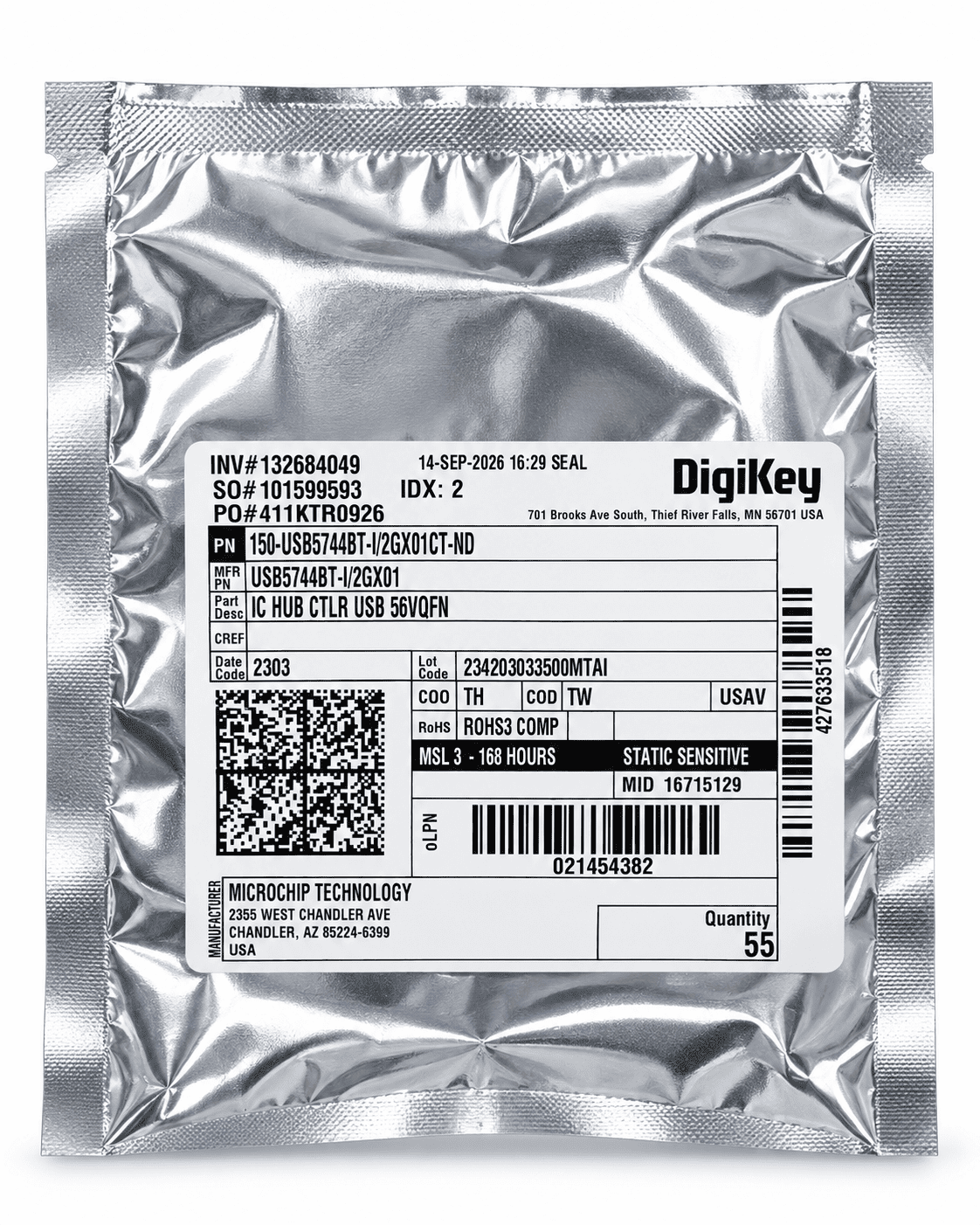
Manufacturer versus distributor code
MFR PN is the Microchip identifier. The longer PN above is a distributor catalogue code and includes its own fulfilment suffix.
Lot and date
The date and lot occupy separate fields. Keep both when asking for one-lot material or checking whether a split shipment meets your receiving rules.
Seal timestamp
This is the distributor’s seal record. It does not establish the silicon manufacturing date or the entire storage history.
Moisture handling
This USB5744 pack states MSL 3 and 168 hours. Use the requested device’s own package classification and applicable handling conditions; these values do not transfer to another device.
Pack quantity
The illustrated distributor pack carries its own quantity. A distributor cut-tape count is not the manufacturer’s standard full-reel quantity.
For this USB hub, retain /2GX01 and confirm the accepted carrier, lot and moisture-handling record.
Discuss this requirement ↗Agree the acceptance brief before testing.
Identity, unused condition and the complete order code are essential. Your device’s programming, assembly and operating requirements still need their own checks.
Identity and BGA handling
Reconcile MPFS250T-FCVG784T2 with label, package and device marks. Keep moisture and resealing records appropriate to the offered package.
Fabric configuration
Record the selected target, tool version and permitted programming actions. Security changes require explicit instruction.
Processor platform
Agree boot, memory and selected interface checks on the correct board. A generic FPGA programming fixture does not exercise the full SoC platform.
Agree the lot, sample count, method, fixture, limits, report and sample disposition. Electrical or specialised analysis depends on laboratory feasibility; it is not implied by an external visual inspection.
Give each method a defined purpose.
Internal images and external photographs provide different observations. Agree the specific concern and comparison reference before requesting analysis. This process image does not establish the identity or electrical function of the device being sourced.
Explore inspection reportsSupport the board already in service.
A targeted component purchase can support your existing EMS or repair team. Keep the released board, programming baseline and receiving requirements together while sourcing the missing line.
Plan an OEM / EMS shortage purchaseAutomotive electronics builds
A production requirement may be tied to the approved T2 offering and a specific processor/software baseline.
Embedded computing platforms
A limited component purchase can support an existing board when fabric configuration and processor boot must be reproduced together.
Send the requirement your board needs.
ICstoq reviews our inventory and established China supply relationships against the complete order code, quantity, required arrival date and destination. The quotation confirms the offered lot, inspection scope and delivery terms.
Send your enquiryInclude these details
- MPFS250T-FCVG784T2 and required trace/qualification documents
- Fabric image, boot-software revision and external-memory setup
- Allowed programming actions and separate fabric/boot acceptance
Identify fixed requirements and any alternatives already approved by your engineering team. We agree feasible inspection work and sample acceptance before proceeding.